Clothes and hair are where many drawings lose their confidence. A face can be carefully observed, and then a sweater turns into a flat shape or a braid into a row of loops. The fix is usually the same: look at more examples of how each material behaves, and notice what it does at the edges, in the folds and where it meets another material.
This collection brings together 31 images from the older Toonizer archive, grouped by texture rather than by style. Each caption points to one thing worth studying. The images are AI-generated, so treat them as references for shapes, light and mood; for small mechanical details such as seams, buttons or fingers, check a real garment or photo as well.
Knits are soft but bulky. They fold in thick, rounded shapes, and the rib pattern bends with the body underneath. You rarely need to draw every stitch: a few lines of ribbing at the cuffs, the collar and the hem usually carry the whole texture.
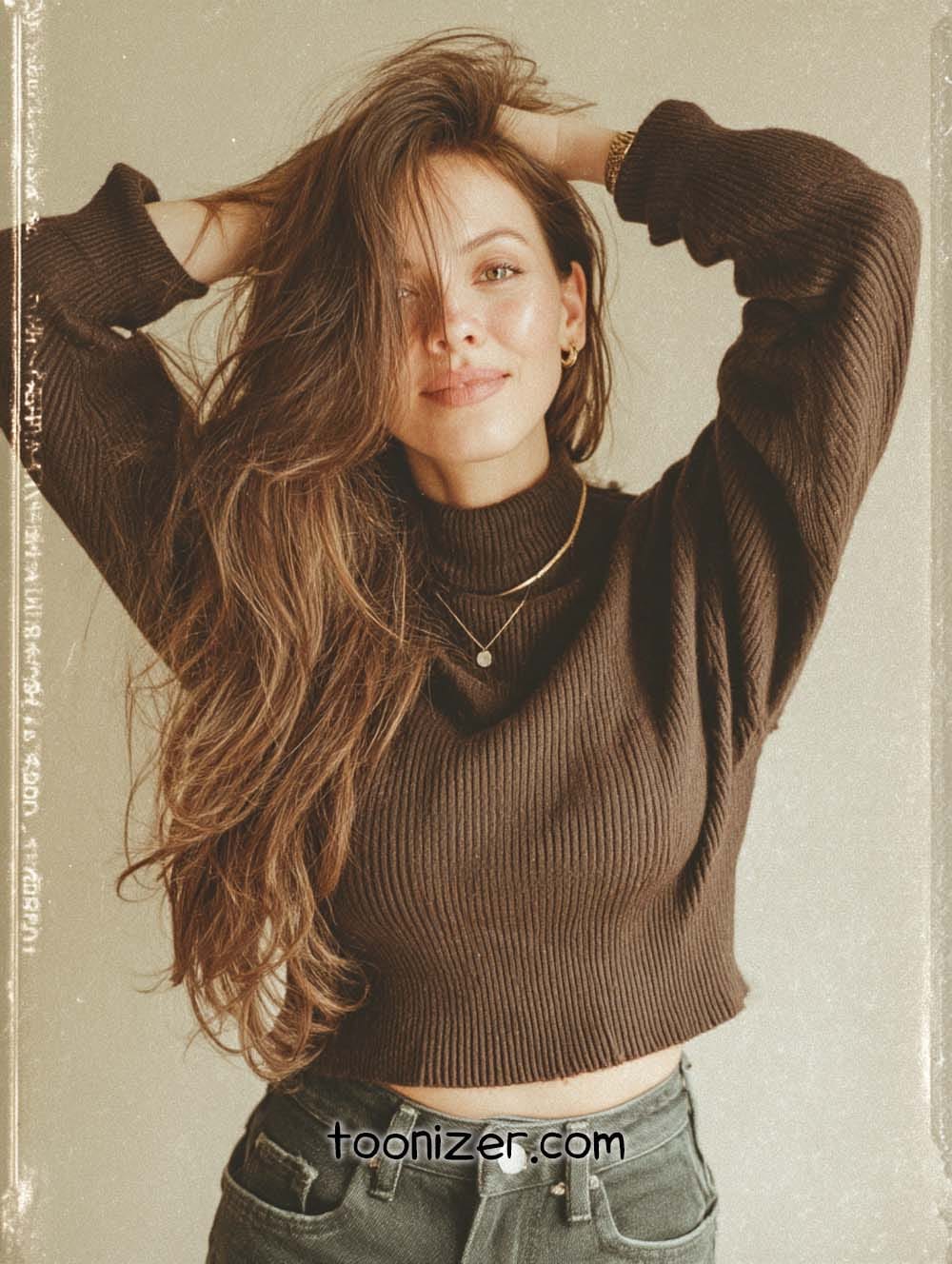
Raised arms pull the sweater up and stretch the ribbing on the sleeves. Notice how the vertical ribs follow the curve of the body.An oversized knit: the shoulder seam drops low and the sleeves collect in soft, heavy folds at the wrist.A patterned knit. The flowers shrink and bend where the arms cross, which helps show the form under the pattern.A fine grey knit next to a heavily embroidered vest. Two textures on one figure, kept apart by value and detail.
Linen and light cotton
Linen creases easily and holds the creases. The folds are sharper and more irregular than knits, and loose shapes hang straight down from the points where they are supported: shoulders, waist, knees.
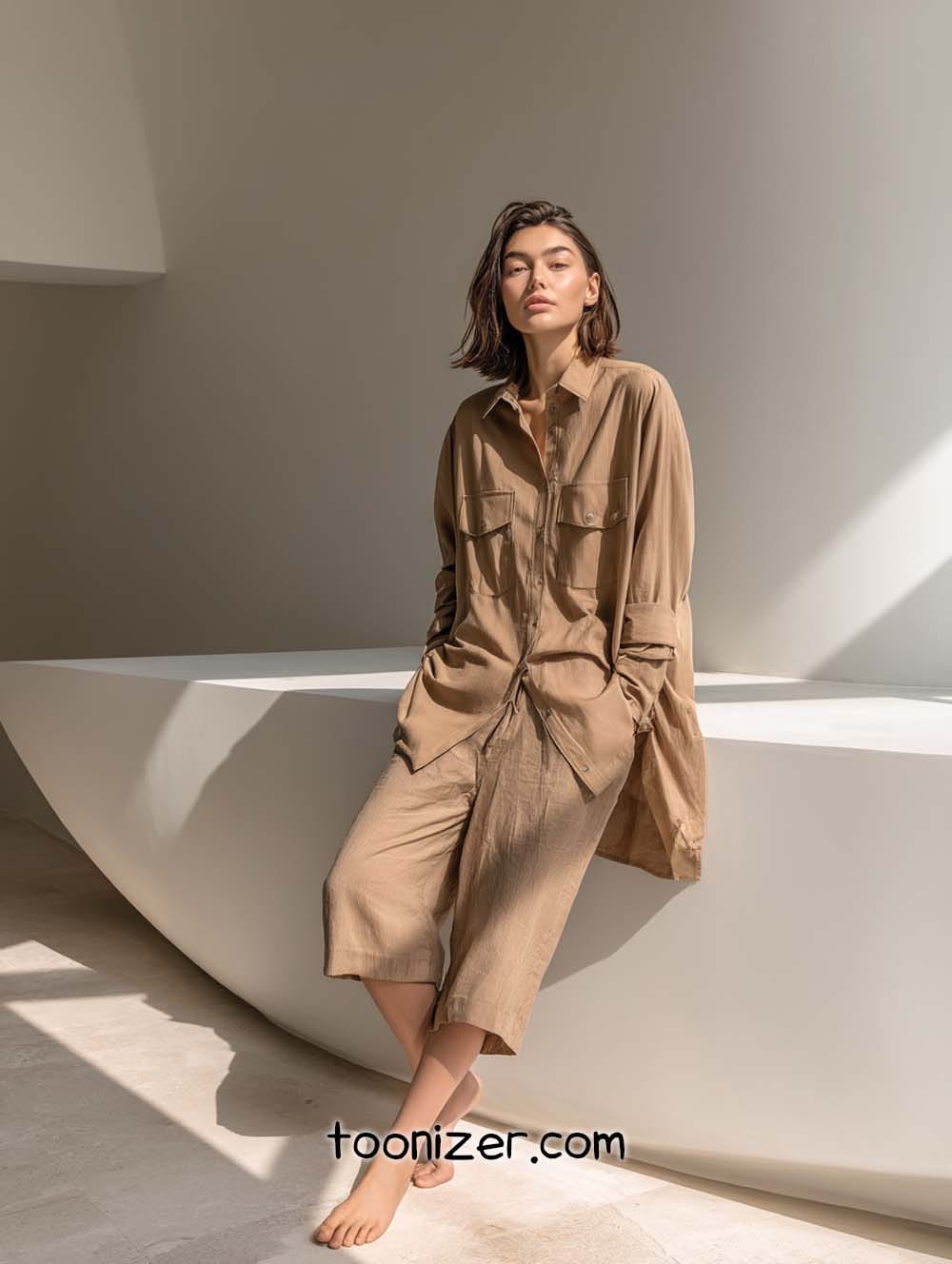
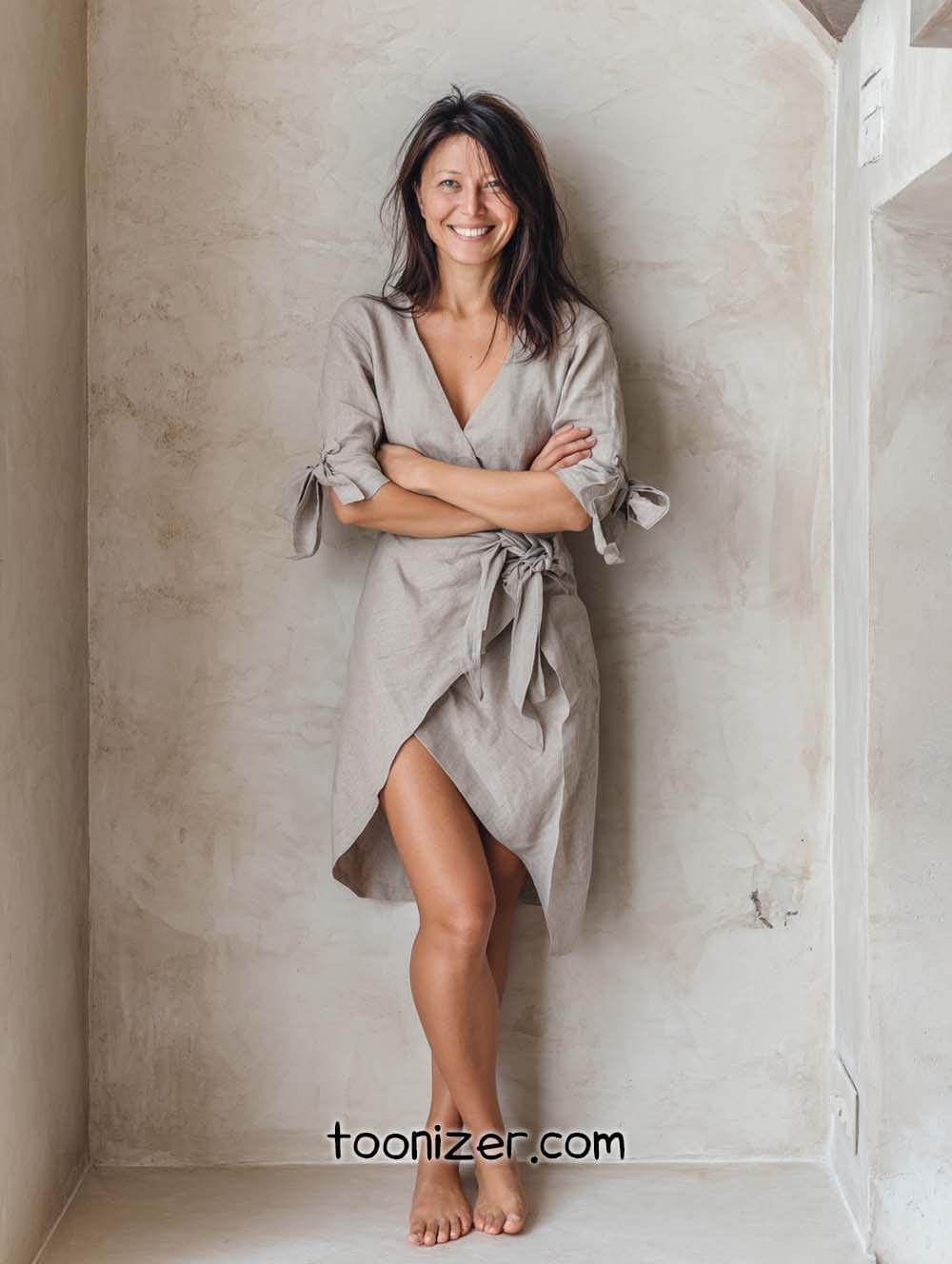
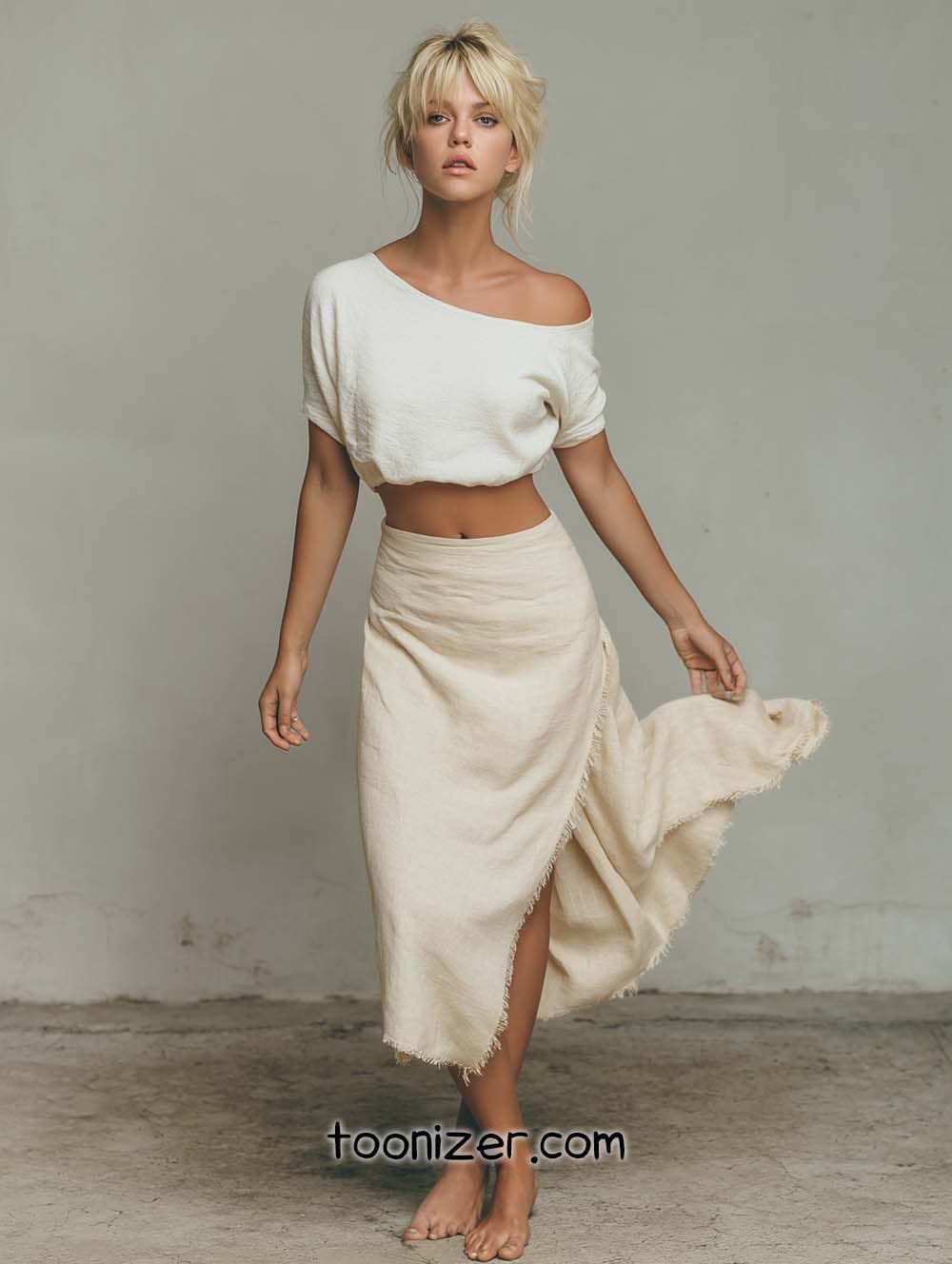
An oversized shirt with hands in the pockets. The fabric hangs from the shoulders and breaks into small creases at the elbows.A wrap dress: follow the diagonal from the shoulder to the tie at the waist, and the bows at the sleeves.Cross-legged trousers bunch at the knees and ankles. A good study of folds that radiate from bent joints.A skirt in motion. One hand lifts the edge, and the frayed hem shows the weight of the fabric.A gathered dress pooled around the knees, with worn suede boots below. Compare the soft fabric with the stiffer leather.Full sleeves gathered at the cuff, a knotted waist and a headscarf: three different ways fabric is held in place.
Layers and movement
When several garments are layered, each one has its own weight. Wind and movement make the difference obvious: light fabric lifts, heavy fabric drags.
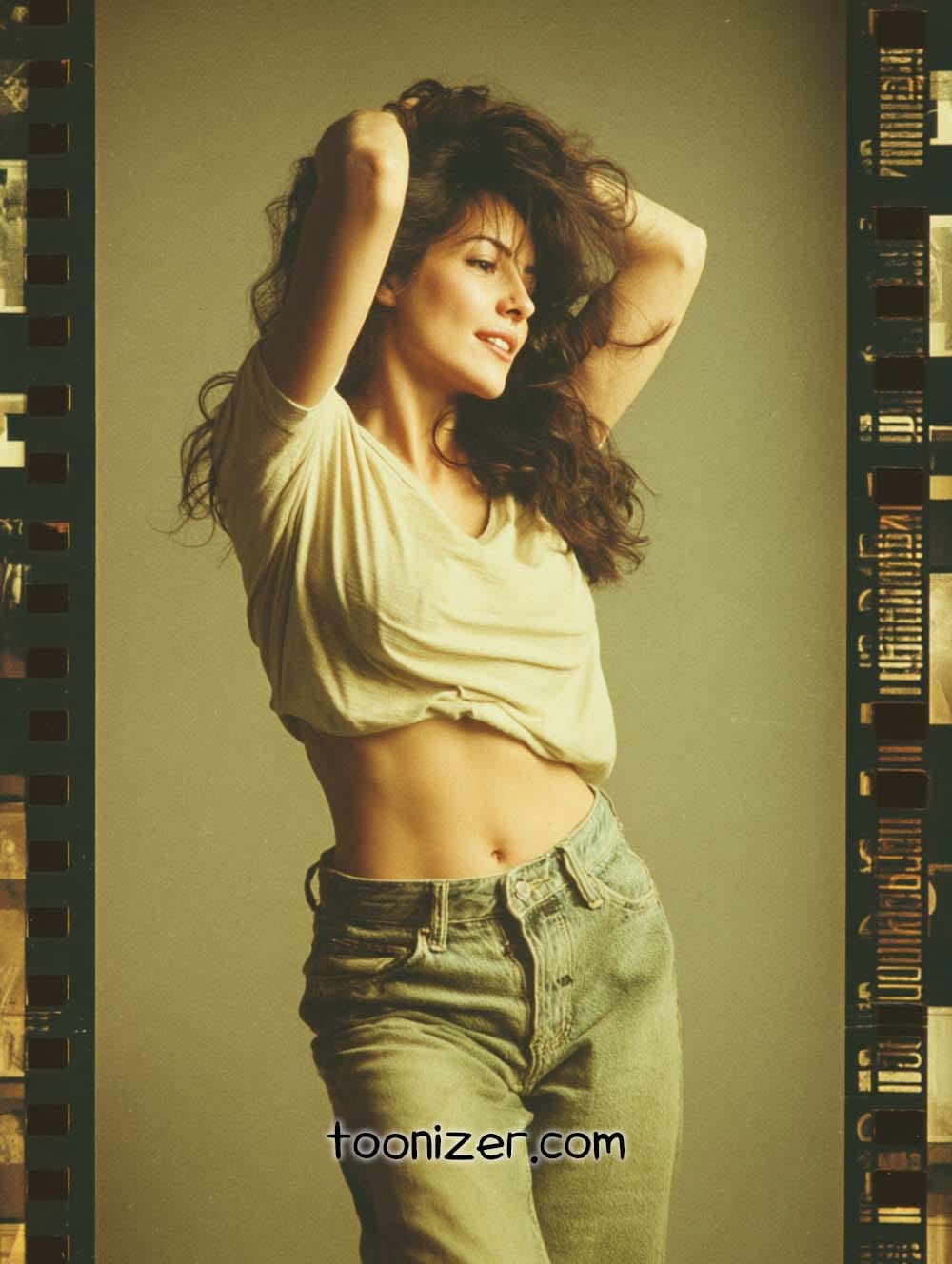
Dress, sweater and scarf in one figure. The long skirt spreads across the grass in large, heavy folds.Movement caught mid-turn: the ponytail swings out and the jacket slides down the arms.A soft T-shirt over stiff denim. The jeans keep their shape while the shirt crumples where it is gathered.
Prints and ruffles
A printed fabric is a good test of form, because the pattern has to follow every fold. Ruffles add a second rhythm on top of the main shape.
Bell sleeves in a paisley print. The pattern gets larger and flatter as the sleeve opens out.A small floral print gathered at the shoulders, with a high scarf folded around the neck.Ruffles along the neckline and sleeves, with a thin scarf knotted at the throat.A crouching pose compresses the trousers into deep folds; the floral print breaks up across them.
Embroidery
Embroidery sits on top of the fabric, so it has a slight relief and catches light differently. In a drawing, it often works best as a band of pattern with a clear edge, placed where garments are finished: cuffs, collars, hems and front openings.
An all-over floral jacket with a fur lining at the front edge. Large motifs on the shoulders, smaller ones at the collar.Embroidery concentrated on the sleeve, wrapping around the arm in bands.Embroidered cuffs on a plain tunic. The hand resting on the chin is also a useful pose study.Red on red: the embroidery is close in colour to the fabric and reads mainly through texture. The dog’s fur is a good contrast.A full figure in motion, with embroidery on the coat edges and the legs. Note how the bag strap cuts across the coat.
Fur
Fur is drawn by its edges. Inside the shape, a few tones are enough; at the outline, short directional strokes show which way the hair lies.
Thick shoulder fur with a soft, broken outline against the pale sky.Three kinds of soft texture together: wind-blown hair, a fur collar and the animal’s short coat.
Hair
Hair is easier when you draw it as a few large shapes first and add strands only at the edges. Curls, braids and wind-blown hair each break that big shape in a different way.
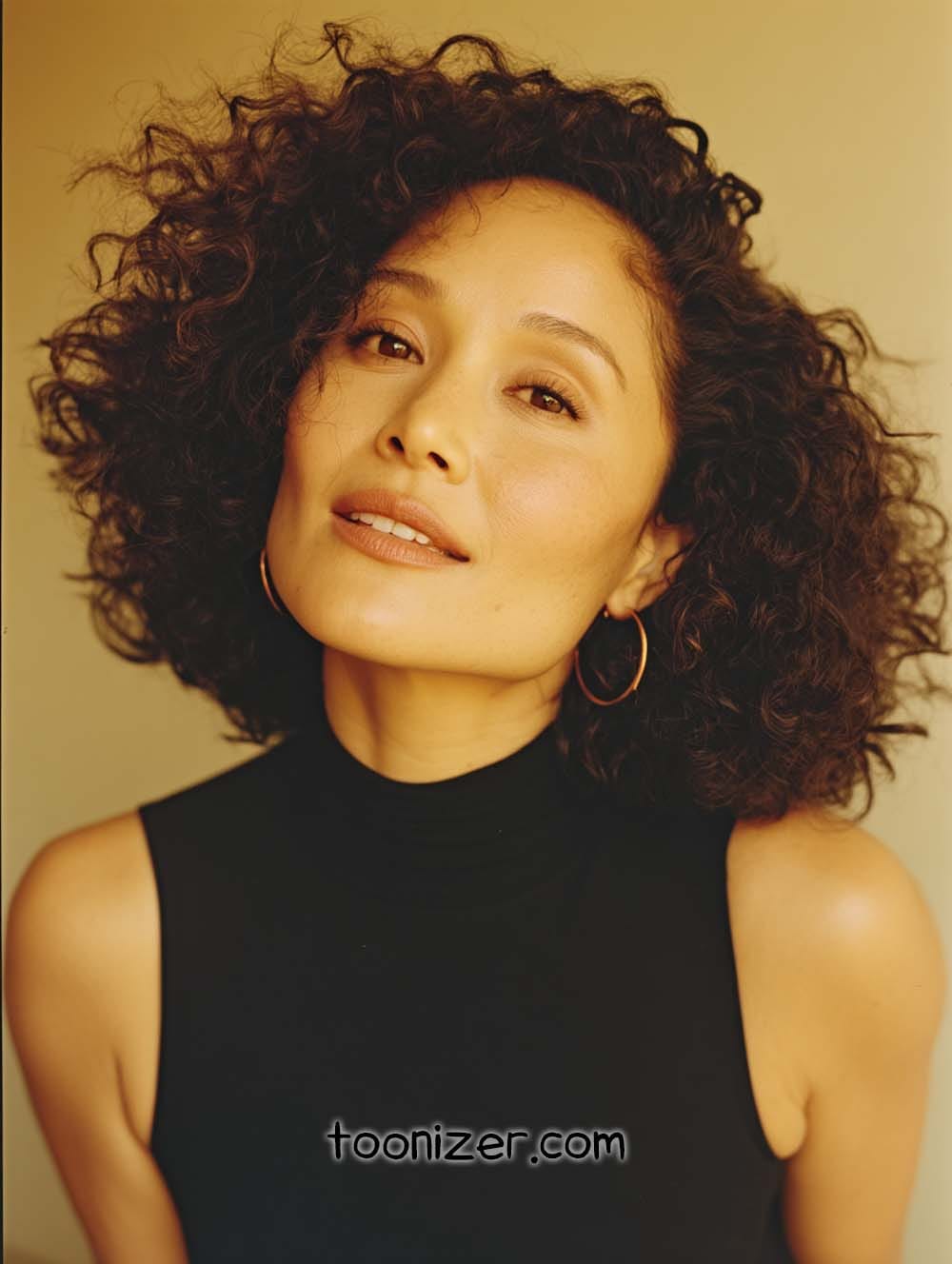
Tight curls forming one large rounded mass, with separate curls only at the outline.Shorter, looser curls with bangs. Compare how much more of the face shape they reveal.A braid seen from the front, ending in a loose tuft. The leather strap and buckle are a good hard-edged contrast.Two loose braids over the chest. Each section of the braid catches light on its top edge.A view from below, looking up. Useful for the angle of the jaw and ear, and for flyaway strands against the sky.
Jewellery and accessories
Metal and beads are small, hard and shiny. A single bright highlight and a dark edge are usually enough to separate them from the soft materials around them.
Large earrings, layered necklaces and a leather strap over a printed scarf. A lot of detail, held together by a soft background.Beads, a round beaded earring and a fur collar. Notice how each bead has its own small highlight.
How to use these references
Pick one texture at a time and do a few quick studies: five minutes per image, only the main shapes and the edges. After a handful, try drawing the same material from memory on a different figure. That is usually the point where a texture stops being a problem.











0 Comments