Anatomy Study: 31 Reference Images for Faces, Expressions, Hands and...
Anatomy Study: 31 Reference Images for Faces, Expressions, Hands and Poses
31 reference images for anatomy study: facial expressions and the muscles behind them, head angles, hands, seated and standing poses, movement and how posture changes with age.
Anatomy is easier to learn from a body that is doing something. A neutral front view shows proportions, but a frown shows which muscles pull the brows down, a crouch shows how the knees fold, and an older person carrying weight shows how posture changes over a lifetime.
This collection gathers 31 images from the Toonizer archive, chosen for what they show about the structure underneath. They are grouped from the head down, and each caption names one thing to look for. The images are AI-generated, so use them for gesture, light and general form, and check a real anatomy reference or a live model for exact details such as fingers, joints and muscle attachments.
Facial expressions come from small muscles that pull on the skin. You do not need to memorise all of them, but knowing a few helps you place wrinkles and bulges where they actually form instead of drawing a generic “angry” or “happy” face.
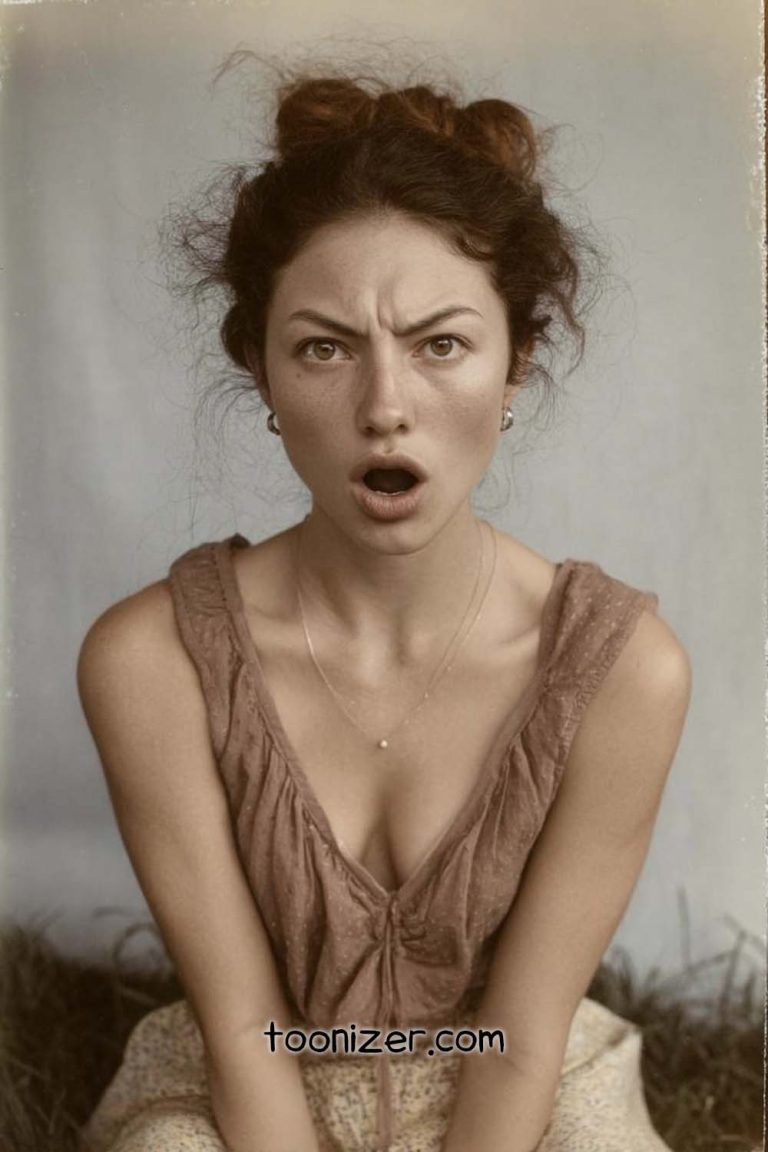
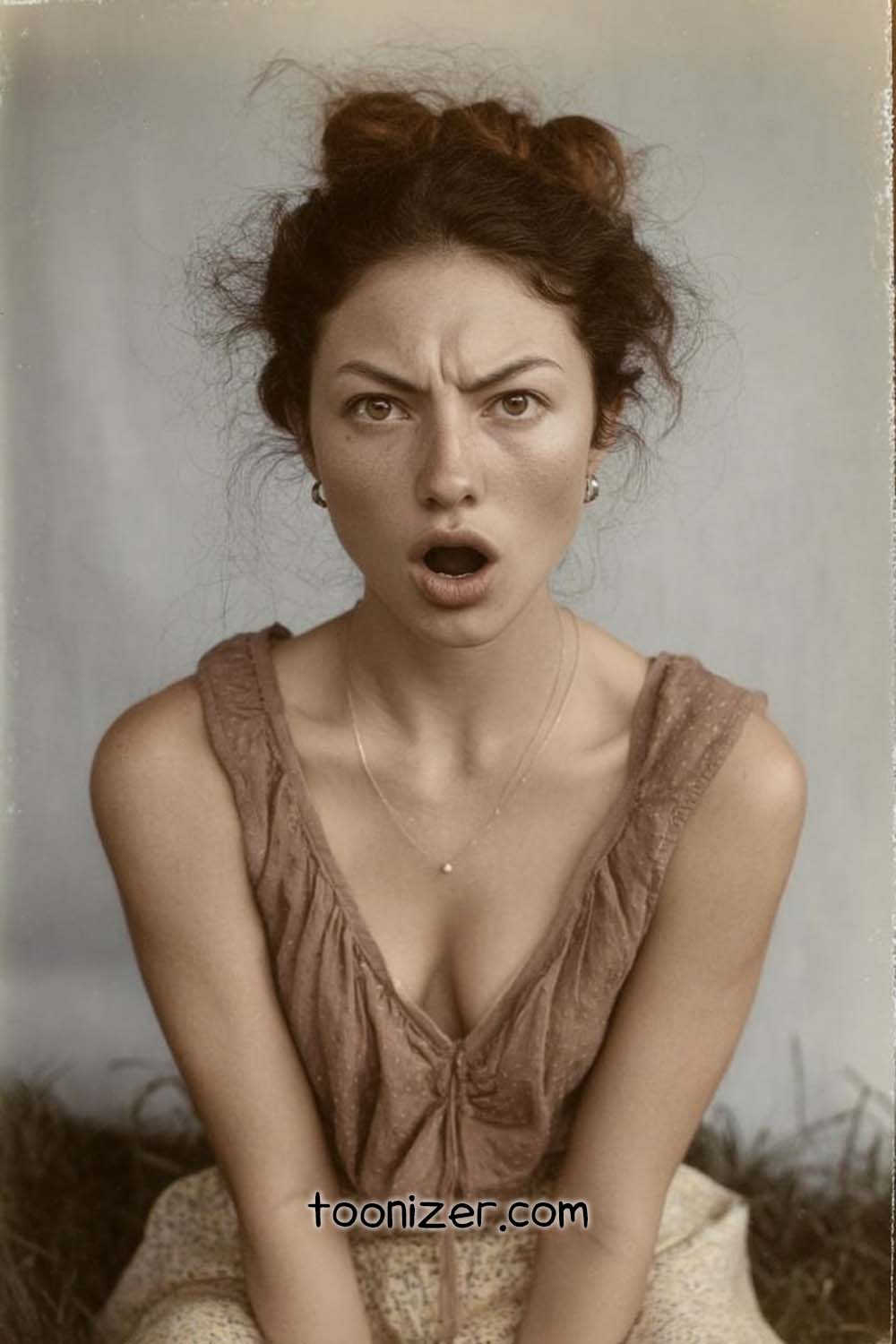
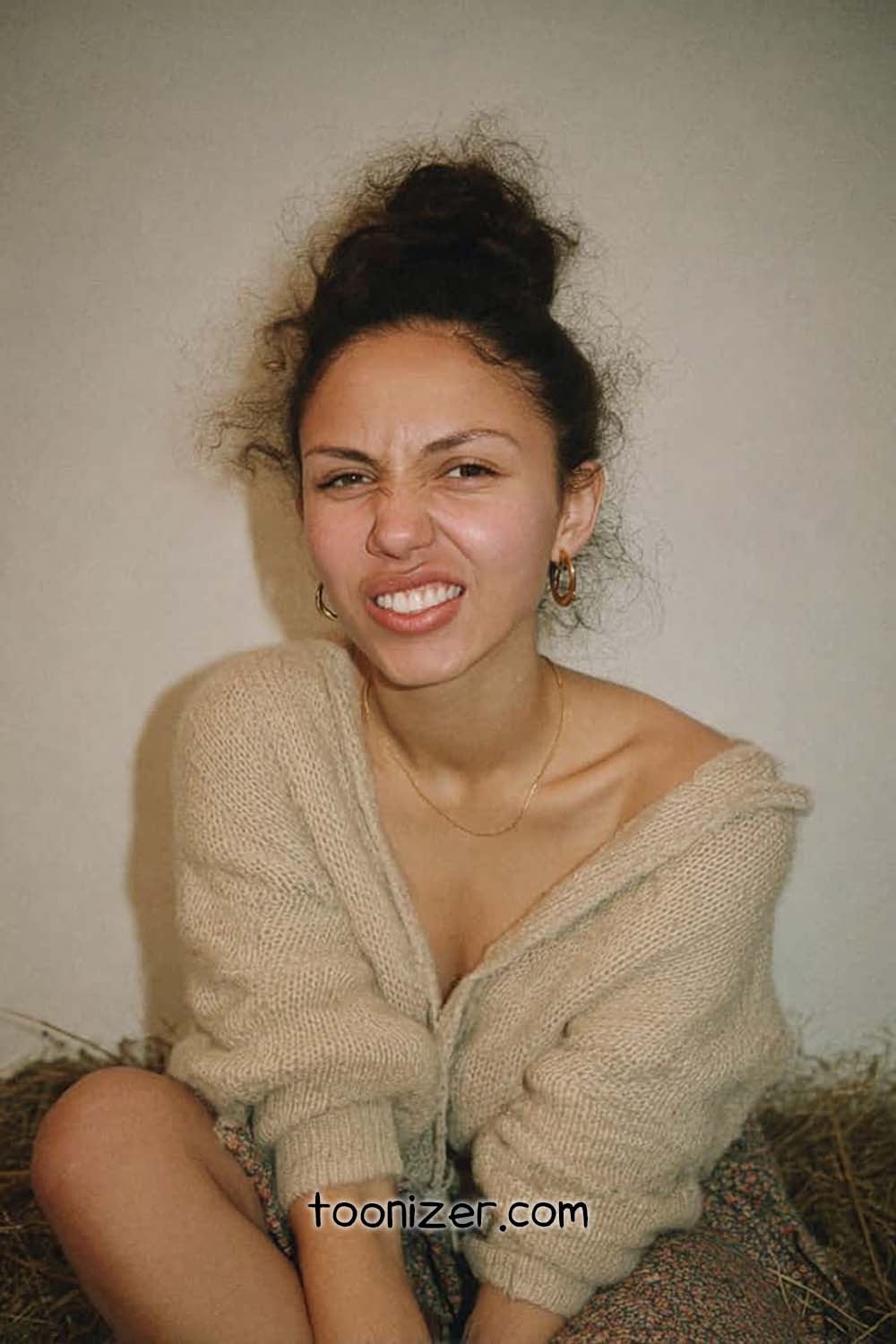
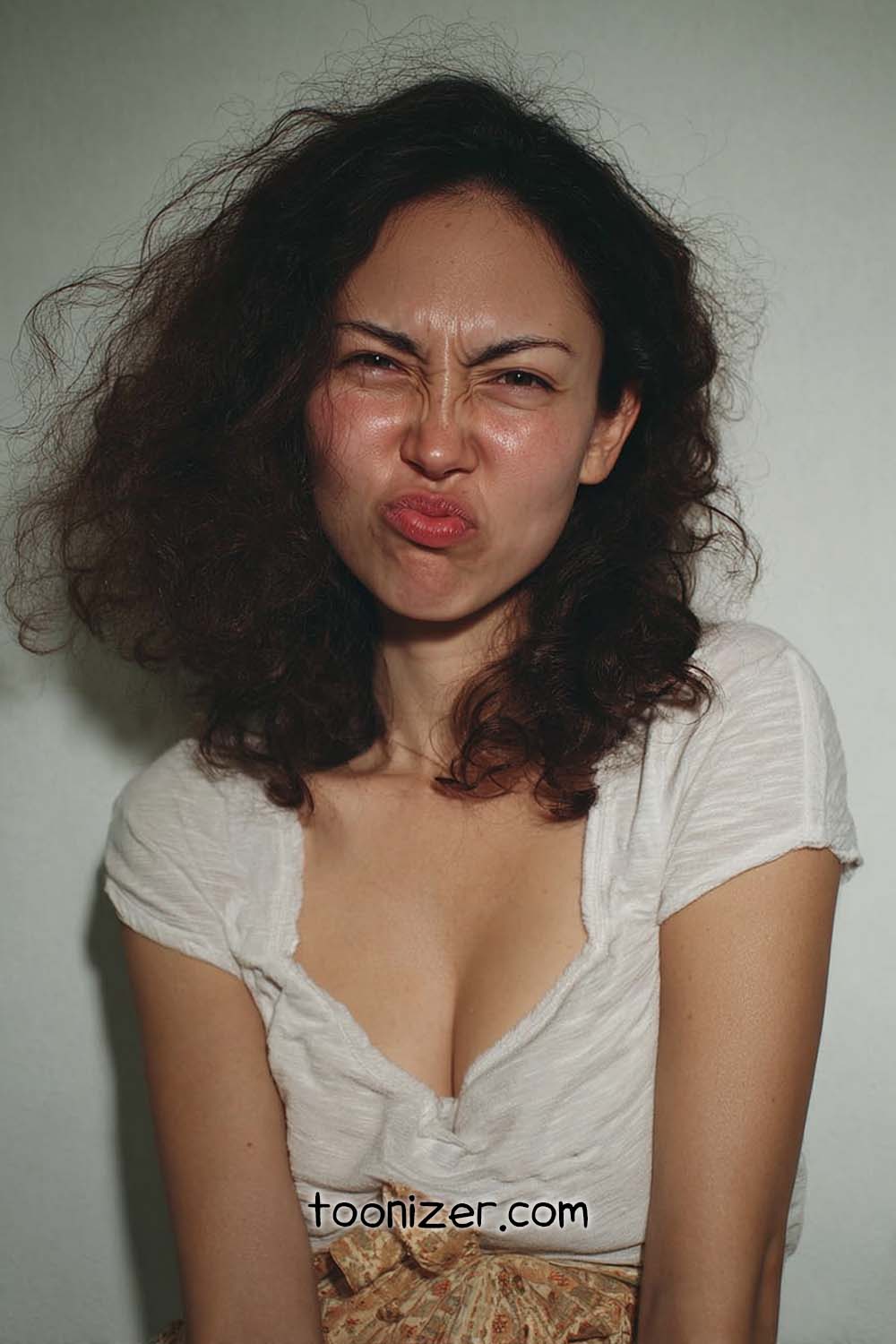
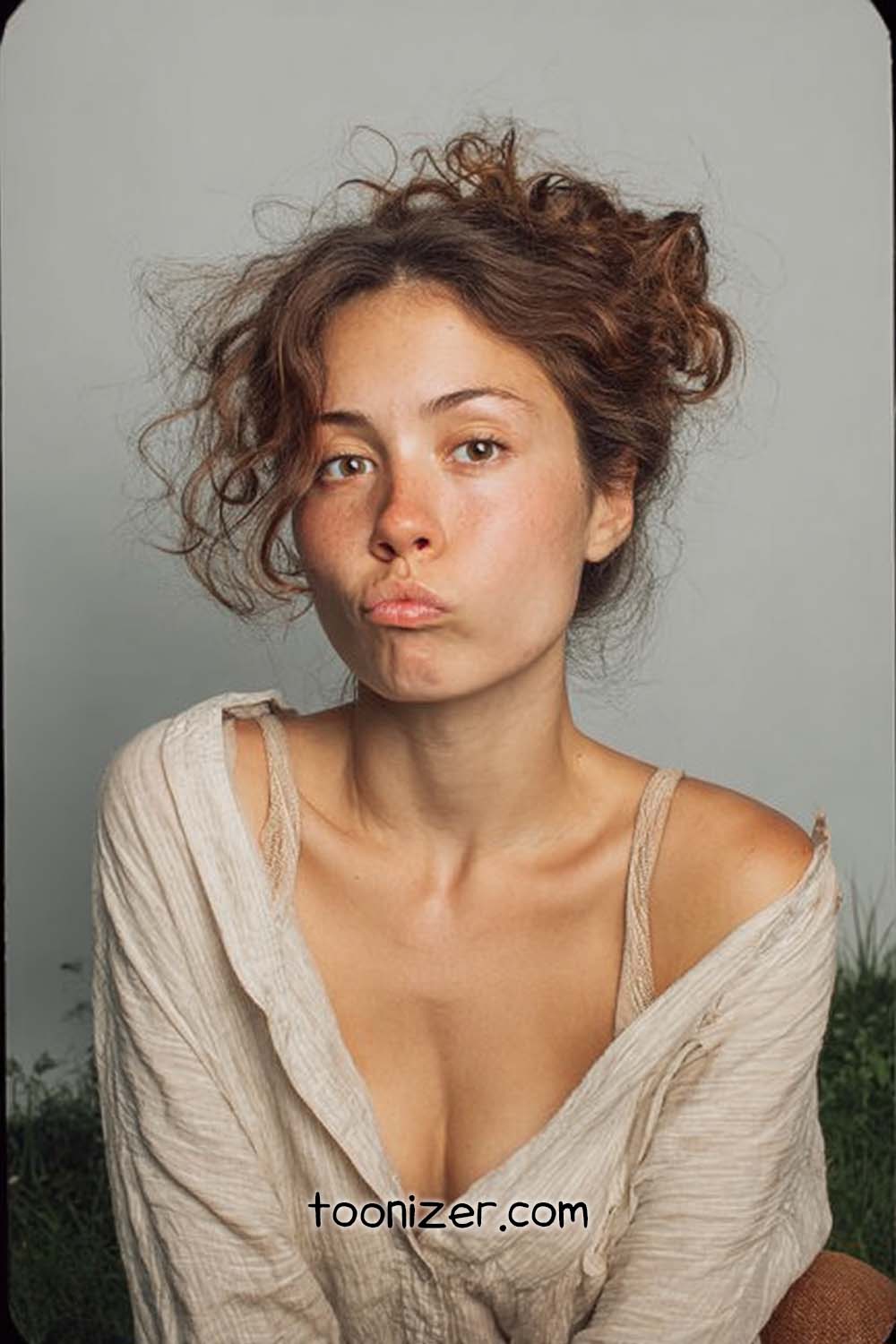
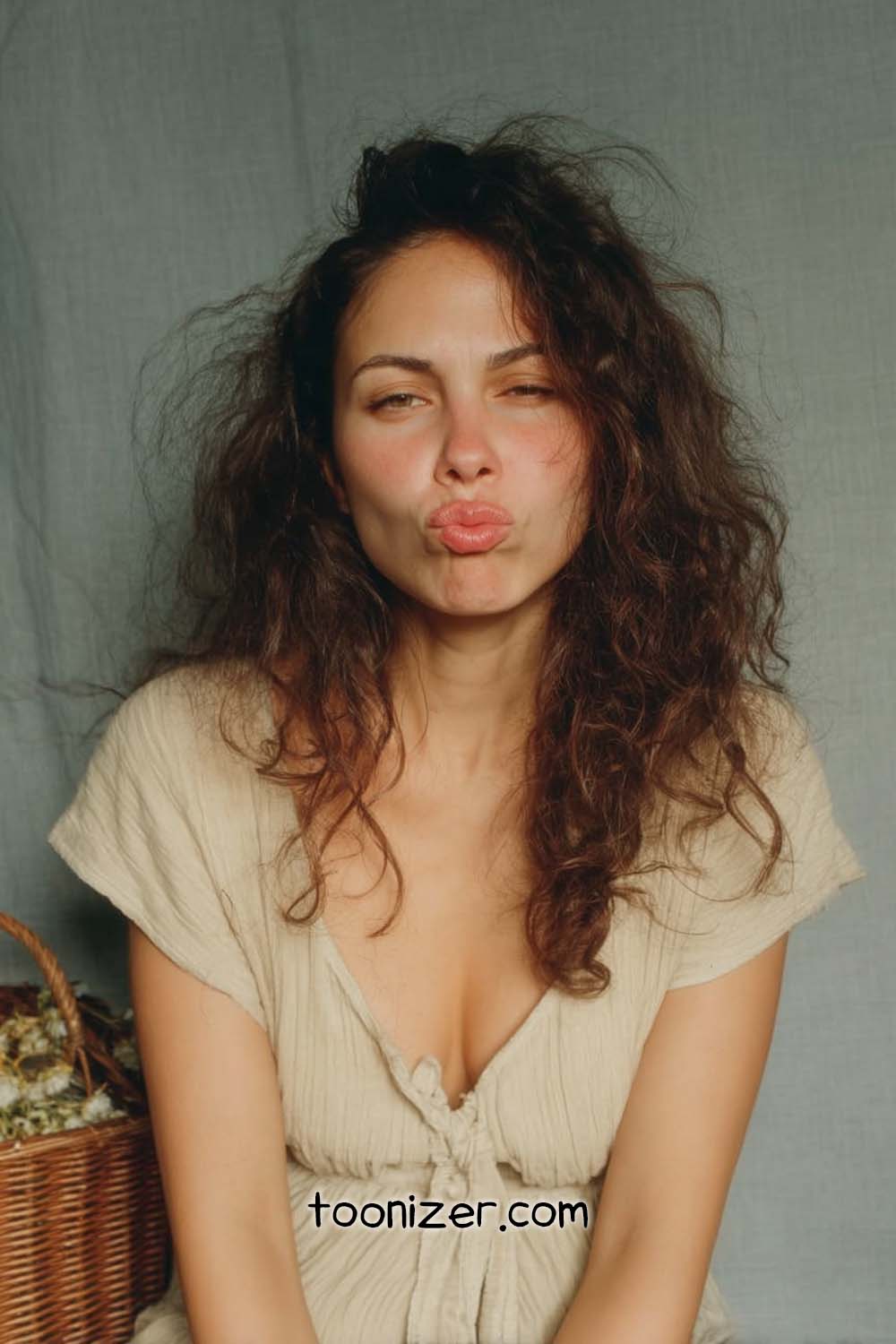
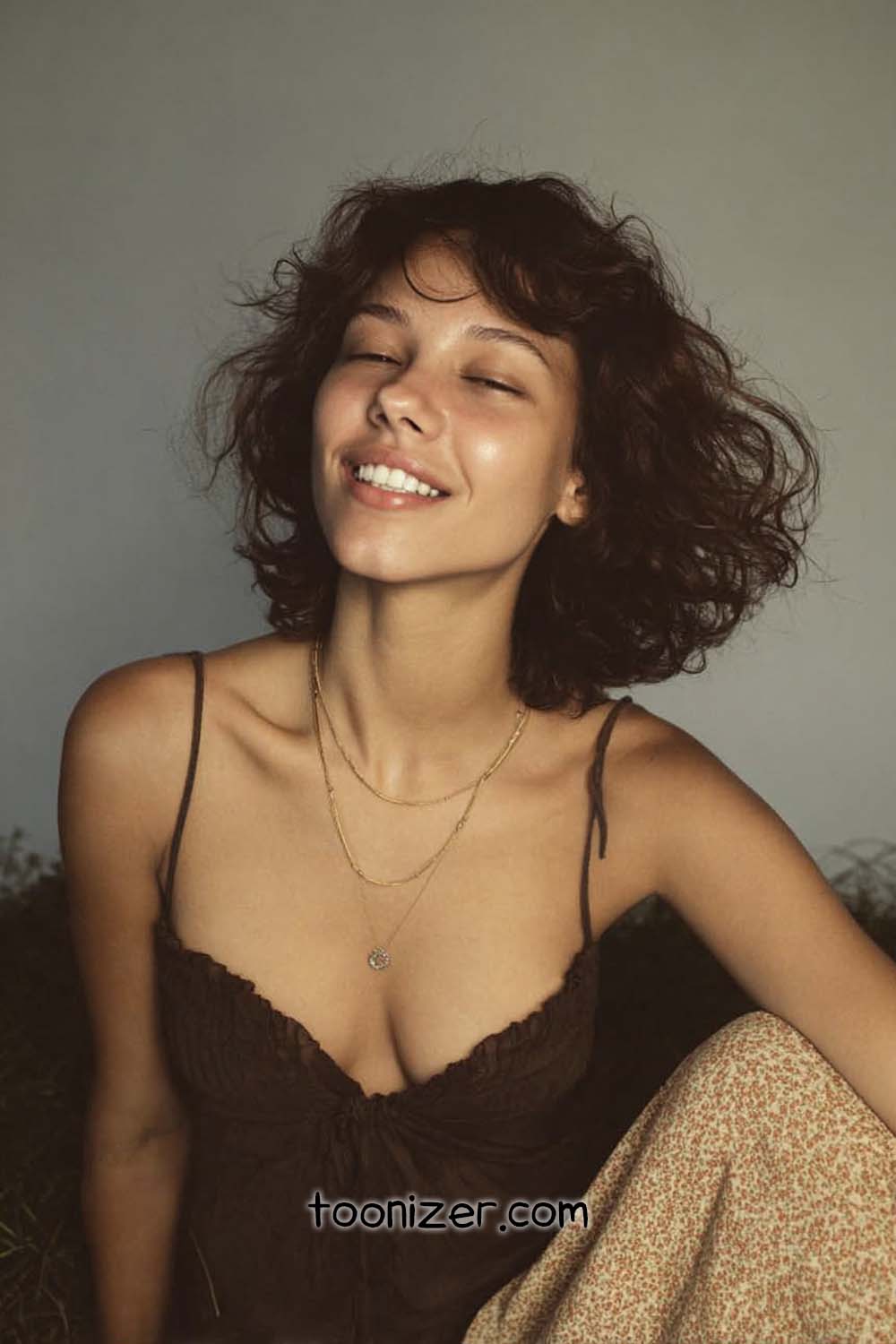
Shouting in anger. The brows are pulled down and together, the nose wrinkles, and the neck tightens below the jaw.A frown with an open mouth. The vertical creases between the brows come from the corrugator muscles pulling the brows inward.A grimace. The upper lip lifts, the nose wrinkles at the bridge and the cheeks push up into the lower eyelids.The whole face scrunched toward the centre. Notice the bumpy texture on the chin, made by the mentalis muscle pushing the lower lip up.Puffed cheeks. The lips are sealed and the cheeks round out. The collarbones and the muscles at the side of the neck are also clearly visible.A pout. The ring-shaped muscle around the mouth pushes the lips forward and creates small vertical folds above the upper lip.A full smile. The mouth corners pull up and back, the cheeks rise, and the eyes narrow from below. A smile that does not reach the eyes looks forced.A resting face, for comparison. The hand pushes the cheek up slightly, which changes the shape of the eye on that side.
Head angles and the neck
The neck is not a cylinder stuck under the head. Two long muscles run from behind each ear down to the top of the breastbone, and they stand out whenever the head turns or tilts back.
A clean profile. Follow the line from the brow to the nose, lips and chin, and note how far back the ear sits.The head seen from below. The jaw becomes a strong diagonal and the underside of the nose and chin are visible.The head tipped back a little. Look at the length of the neck and the folded forearms resting on the knees.
Hands and arms
Hands are easiest when you first block them as a mitten shape and then split off the thumb and fingers. Arms show their structure best when they bend or carry weight.
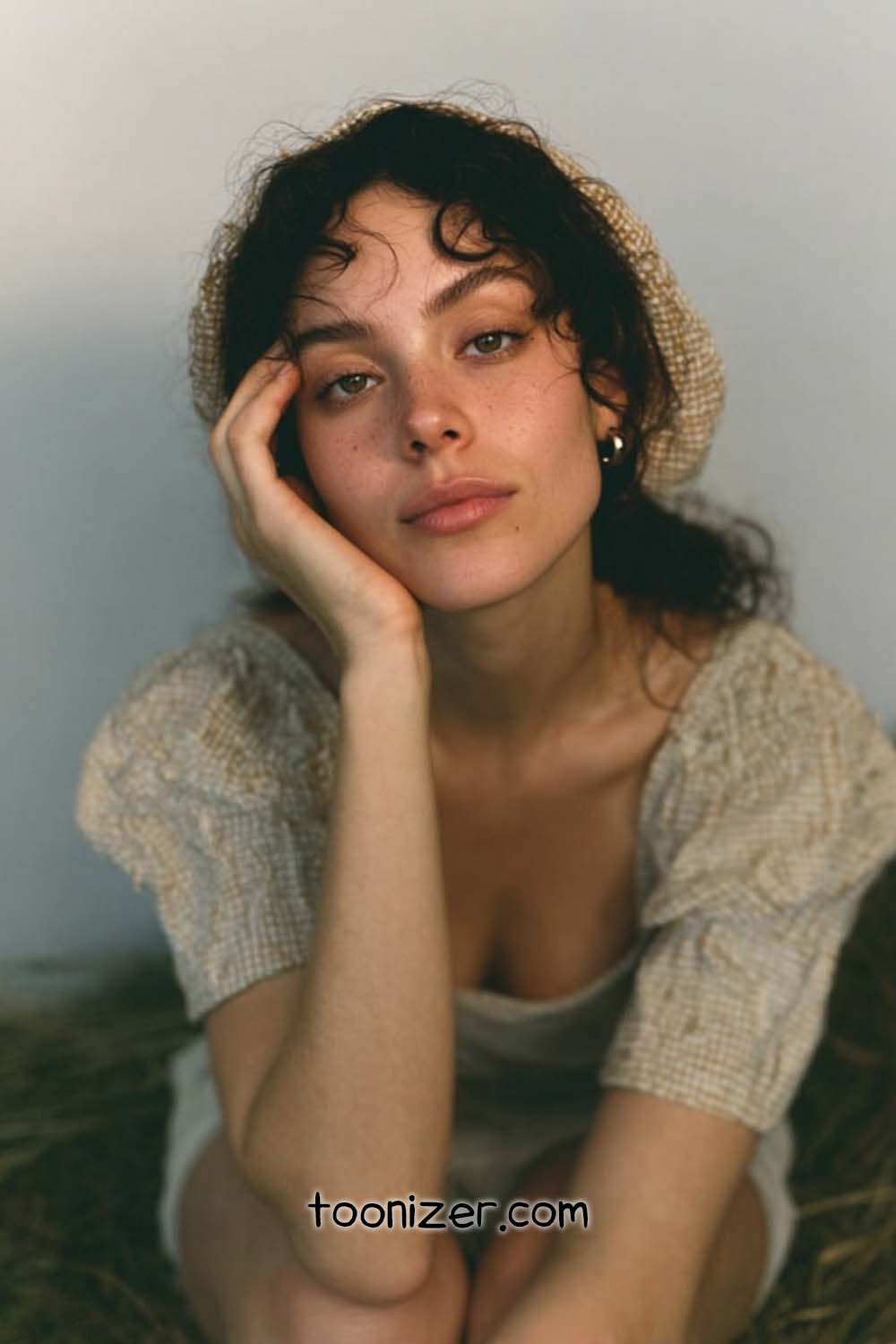
Chin resting on the back of the fingers. The wrist bends and the fingers curl, which compresses the hand into a compact shape.Both arms raised. The shoulders lift, the elbows point outward and the ribcage stretches upward.Crossed arms, standing. One arm lies over the other, and the forearms overlap at a slight angle rather than in a straight line.
Sitting, crouching and folding
When the body folds, the joints become the main landmarks. Knees and elbows turn into hard points, and the long shapes of the thighs and shins are seen in foreshortening.
Cross-legged in hard sunlight. The light picks out the collarbones, the shoulders, the knees and the arches of the feet.Cross-legged, seen straight on. The knees come toward the viewer and the thighs shorten sharply.Leaning back on straight arms. The shoulders rise and the weight goes down through the arms into the floor.A deep squat. The forearms rest on the knees and the whole figure fits into a compact triangle.Sitting against a wall with one knee up. The bent leg and the arm resting on it make a clear zigzag through the pose.Another cross-legged pose, softer and more relaxed. Compare the shoulders here with the upright pose above.A crouch with the chin on the hand. The upper body leans forward to keep the balance over the feet.A crouch seen from slightly below. The knees are higher than the hips, and one arm hangs loosely over them.
Standing and weight
Very few people stand with their weight evenly on both feet. Usually one leg takes most of the load, the hip on that side rises, and the shoulders tilt the other way to balance it.
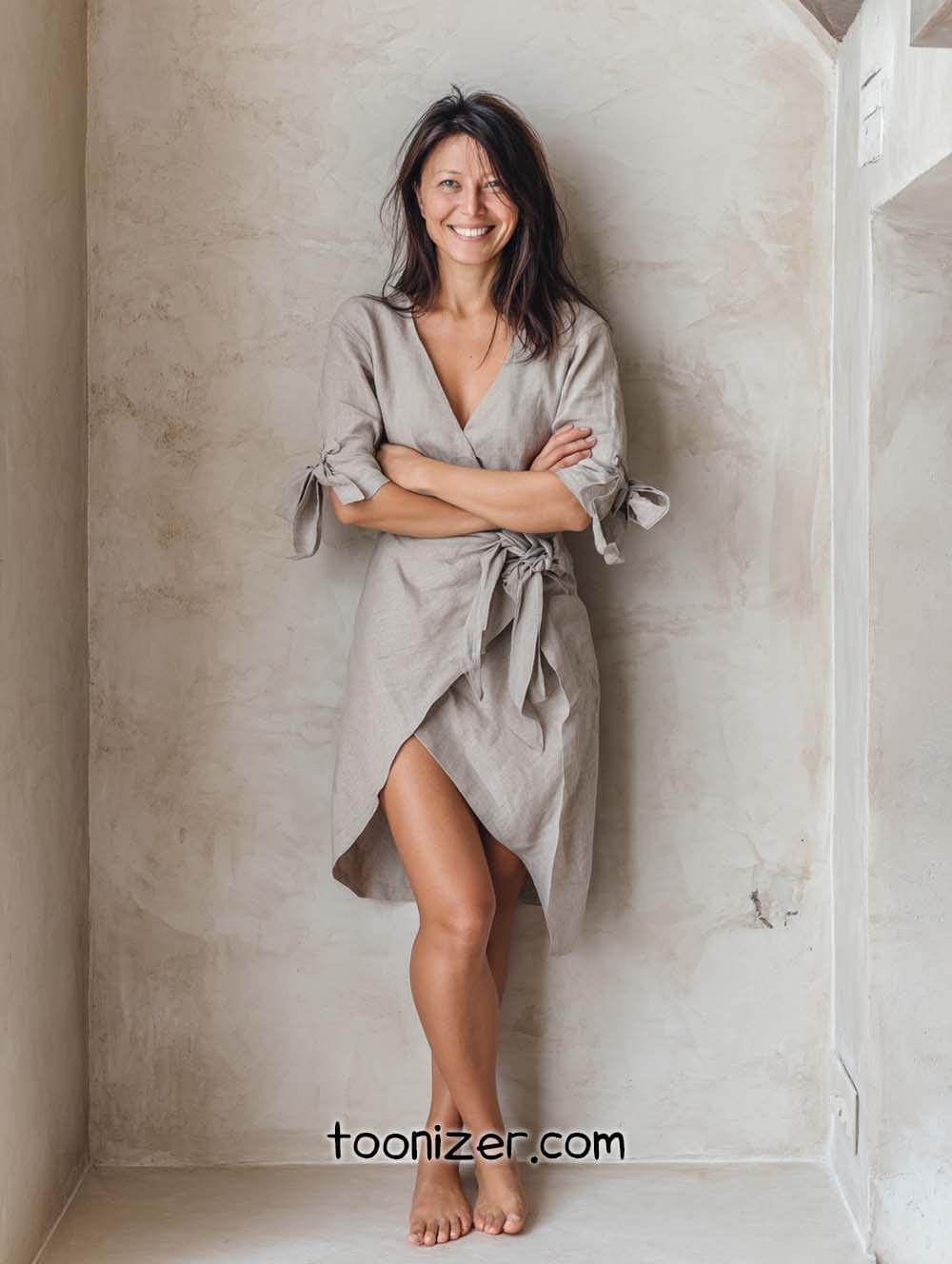
Leaning against a wall. The wall takes part of the weight, so the body can relax into a slight curve.A full standing figure, useful for overall proportions. The crossed ankles narrow the base of the pose.A back view with the head turned. The spine curves, the shoulder blade shows through the shirt, and the neck twists to bring the face into profile.
Movement
In movement, the body is never symmetrical. Look for the line of action, the single curve that runs through the whole pose.
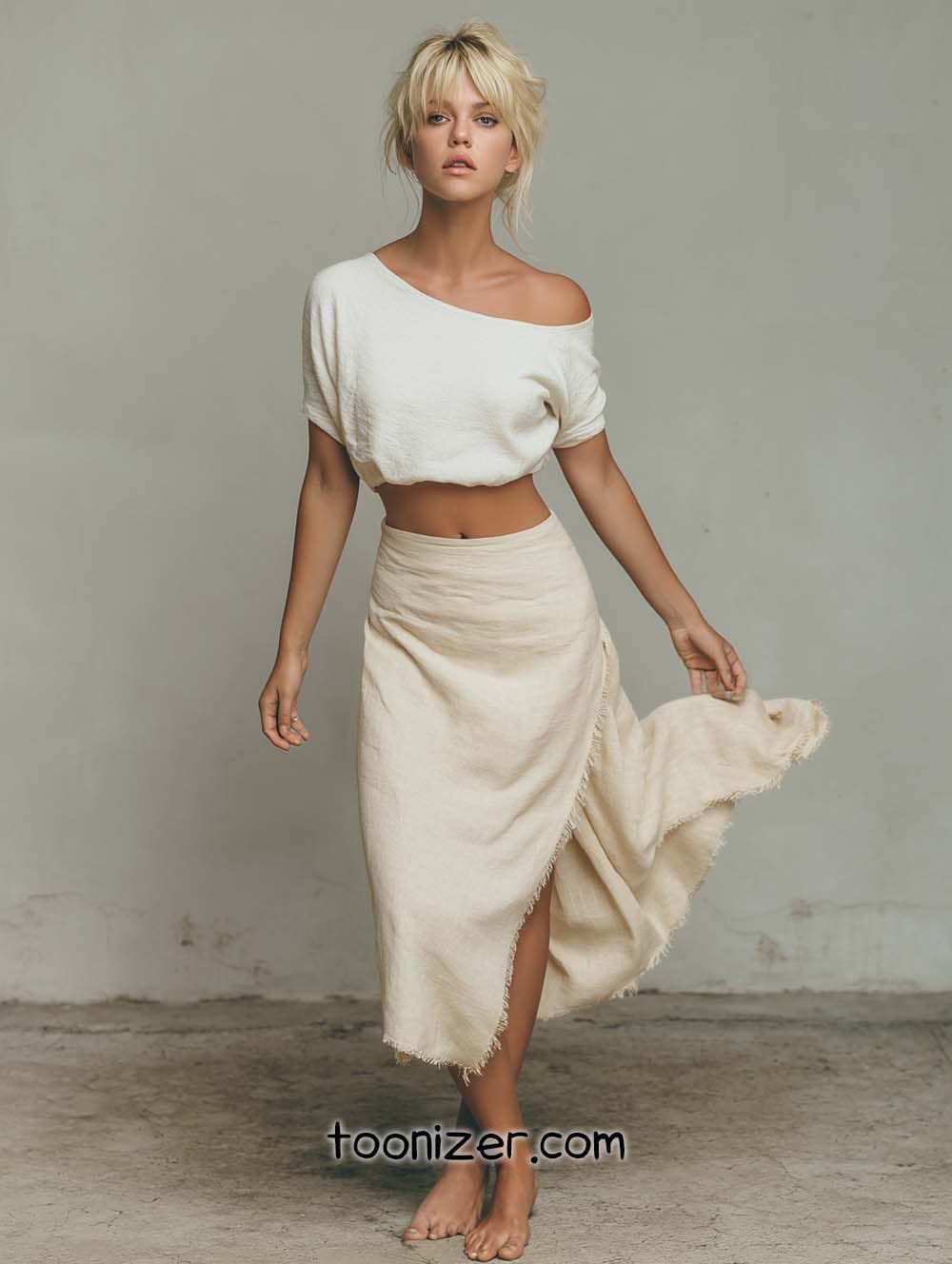
Mid-stride. The arm swings opposite to the leg, and the weight is about to move onto the front foot.A turn caught in motion. The head, shoulders and hips each face a slightly different direction.
Age and posture
Bodies change with age: the upper back rounds, the head moves forward, muscles get thinner and the skin loosens around the jaw and neck. These illustrated characters exaggerate some of it, which makes the changes easy to read.
An older man in profile. The upper back rounds forward and the head sits ahead of the shoulders.Standing with hands in pockets. The arms are thinner and the T-shirt hangs loosely from narrow shoulders.An older face with crossed arms. The folds around the mouth and the heavier lower face change the whole expression.Carrying weight in both hands. The shoulders drop, the feet spread for balance and the arms hang straight.
How to practise with these
Choose one section and do short studies: two minutes per image for gesture, then ten minutes on one image for structure. For the faces, try drawing the same expression on a simple head you make up yourself; if you can place the wrinkles without looking, you have understood which muscles caused them.








0 Comments