Every image in this post was generated with AI. That is the point of it.
If you have scrolled through our galleries of 1970s street portraits, faded hippie snapshots and damaged film, here is something you should know: none of those people exist. Every one of those “analog” photos was made with an AI image model. No film, no camera, no summer afternoon in 1974.
We are not the only ones doing this. Fake vintage photos are everywhere now, especially on Pinterest, and many of them are shared as if they were real. So instead of quietly hoping nobody notices, we went through our own images looking for the mistakes. This post shows what we found: the small, specific signs that give an AI “film photo” away, pointed out on pictures we made ourselves.
Why fake vintage fools us so easily
A modern-looking AI portrait gets inspected. A grainy, warm, slightly faded one gets believed. There are three reasons for that.
- The film look hides errors. Grain, blur and colour casts cover exactly the fine details where AI mistakes live: fingers, text, small objects.
- We expect old photos to be imperfect. A strange smudge in a 1970s snapshot reads as age, not as a glitch.
- Most of us have seen few real ones. We know the mood of a 1970s photo from filters and films, not from shoeboxes of actual prints. The AI has learned the same mood, and that is what it gives back.
The way through is to stop judging the mood and start checking the details. Here are nine places to look.
Nine tells, shown on our own images
1. Text that isn’t text

Look at the shelves behind her. Jars, boxes and packets, all with labels, and not one word you can read. Real shops are full of writing: brand names, prices, handwritten signs. AI models know that labels belong there, so they draw the shape of writing without the writing itself. This is still the single most reliable tell. Wherever a real scene would have text, zoom in.
2. A camera with no maker
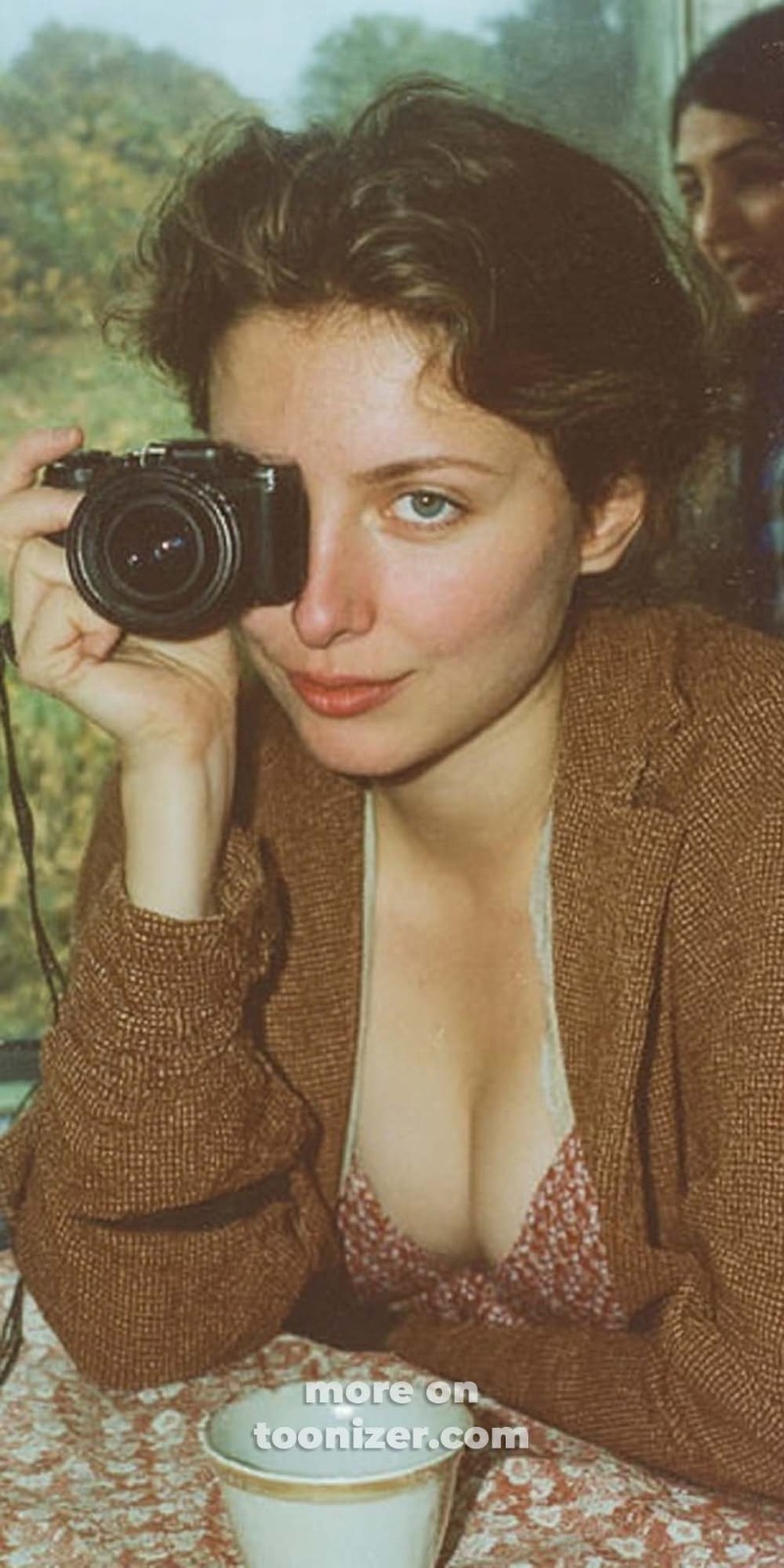
A nice touch: a woman photographing the photographer. But look at the camera. There is no brand, no lettering on the lens ring, no clear viewfinder, and the strap seems to start nowhere in particular. A real camera from any decade is covered in small, precise, functional detail. AI cameras look like the idea of a camera. The same goes for watches, phones and car badges.
3. Reflections that belong to no one

A convincing scene: a commuter, a pearl necklace, trees outside the window. Now look at the left edge of the glass. There is a faint second face reflected there, and it does not match her or anyone else in the carriage. Real reflections obey geometry; they show what is actually in the room. AI models know that windows reflect things, but not what those things should be.
4. Jewellery that dissolves

Follow the thin chain around her neck. It starts clearly enough, then fades into the skin and simply stops, with no clasp and no pendant. Fine, continuous objects are hard for image models: necklaces, earring hooks, glasses arms, bag straps. Trace them with your eye from one end to the other. Real ones always go somewhere. While you are at it, look at the plate: it holds something that is not quite any food.
5. Light that ignores the time of day
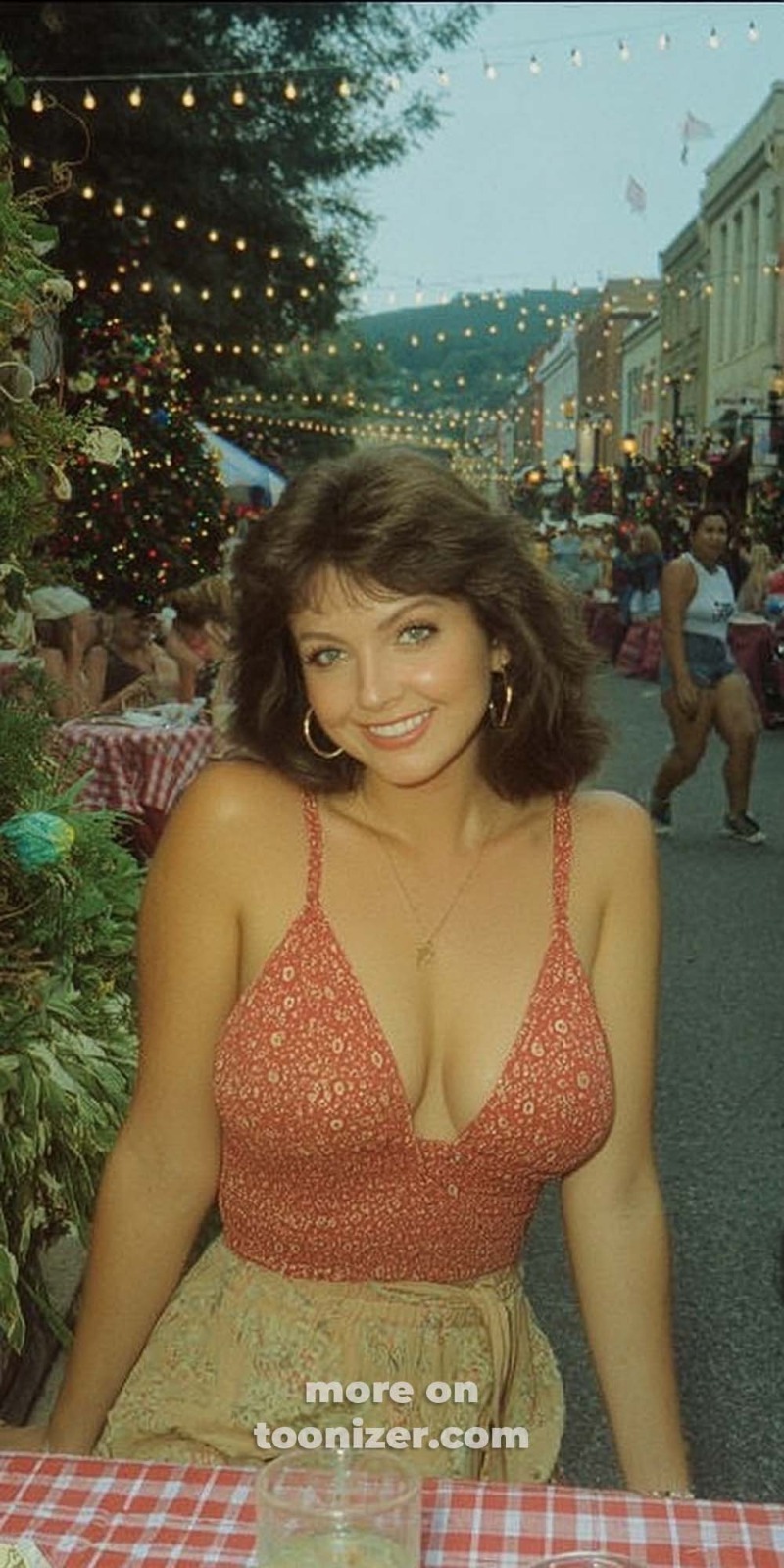
A summer street festival, string lights glowing overhead. But the sky behind them is pale and bright. In a real photo, bulbs that small would barely register against daylight, and the camera would never capture them glowing like this unless it was close to dark. The model was asked for “festival atmosphere” and supplied all the ingredients at once. Check whether every light source in a picture makes sense at the same moment.
6. Clothes without seams

The oversized jacket looks right at a glance. Try to work out how it is made: where the sleeve joins the shoulder, where the lapel ends, which edge is the hem. You cannot, because there is no construction. AI fabric behaves like a soft texture draped over a body, not a garment sewn from pieces. If you draw or sew, this is the tell you will start seeing everywhere.
7. Blur that belongs to a phone
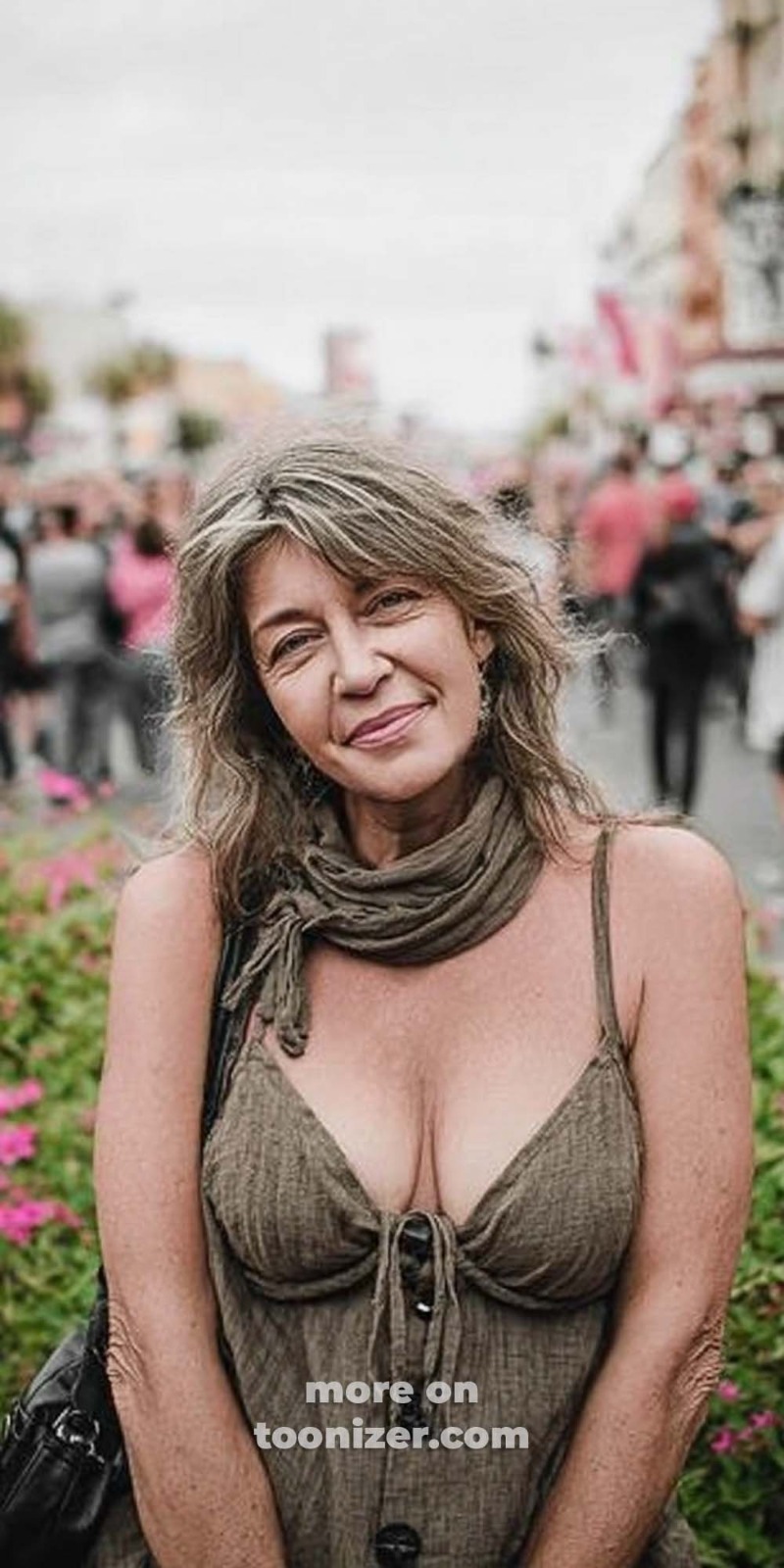
The background melts into a smooth, creamy blur while she stays sharp from hair to waist. That look is typical of modern phones in portrait mode and of expensive fast lenses. Everyday snapshots from the 1970s were mostly taken with simple cameras at small apertures, so backgrounds usually stayed fairly sharp. A “film” photo with this kind of blur has a modern camera hiding inside it.
8. Damage applied like a filter

Dust specks and scratches are scattered evenly across the sky, the post and her face alike. Real film damage has causes, and causes leave patterns: scratches run in the direction the film moved, light leaks bleed in from the edges, water damage pools, and fading follows how the print was stored. When the wear is spread like seasoning over the whole image, it was added for effect. The crowd under the Ferris wheel is worth a second look too.
9. The one that almost gets away

This is the best image in the set, and the hardest to catch. The pose is natural, the crowd behind her holds together, the light is consistent. The clearest clue is small: the clasp of her handbag carries a vague mark that is neither a logo nor plain metal. Some images will give you almost nothing, and that is an important lesson in itself. Not finding a mistake does not prove a photo is real.
What does not work anymore
- Counting fingers. Newer models get hands right most of the time. In this whole set we found no six-fingered hands.
- “The face is too perfect.” Some AI faces are flawless, many now have freckles, wrinkles and uneven skin. Real photos are retouched, too.
- Online AI detectors. They can be a hint, but they produce false results in both directions. Treat them as one opinion, not a verdict.
A two-minute checklist
- Find every place that should have text. Can you read it?
- Look at small manufactured objects: cameras, watches, bag clasps, car badges. Do they have real detail?
- Check windows, mirrors and glasses. Do the reflections match the scene?
- Trace thin lines from end to end: chains, straps, glasses arms.
- Ask whether every light source makes sense at the same time of day.
- Try to work out how the clothes are put together.
- Compare the background blur with the kind of camera the photo claims to come from.
- Look at the damage. Does it follow any physical cause?
So why do we make them at all?
Because they are useful, as long as nobody is fooled. AI images let us build references for poses, light and fashion without photographing real people or borrowing other photographers’ work. They are a way to explore a mood, not a record of a moment that happened.
That distinction only works if it is stated out loud, which is why our posts with AI images say so. If you share our images, we would ask you to do the same.
For more on reading images closely, see Reading the Light and the rest of the Photography category.
0 Comments